
 By
By Introduction
Cold wind can turn a pleasant walk, hike, bike ride, or morning commute into an uncomfortable experience fast. That is where Windbreakers become useful: they give you a light shield against moving air without the bulk of a winter coat.
These thin jackets are made for mild to cool weather, light rain, and active movement. They are easy to carry, quick to throw on, and useful for travel, running, hiking, cycling, campus life, and everyday streetwear. But they are not all the same. A good jacket should block wind, breathe well, pack easily, and fit your real routine.
What Makes Windbreakers Useful for Everyday and Outdoor Wear?
Windbreakers jackets are useful because they solve one specific problem: they reduce the cooling effect of wind. When air moves across your body, it removes the warm layer near your skin. This makes you feel colder, even when the weather does not look extreme.
A lightweight shell helps by creating a thin barrier. It does not need thick insulation to feel warmer. It simply keeps wind from cutting through your shirt, hoodie, or fleece.
These jackets work best in:
- Breezy spring or fall weather
- Morning walks or school commutes
- Light hikes and trail walks
- Running, cycling, and warm-up sessions
- Travel days when weather changes quickly
- Beach, lake, or mountain areas with cool wind
Most styles use nylon or polyester because both materials are light, strong, and quick drying. Many also include elastic cuffs, full zippers, drawcord hems, adjustable hoods, and small packable pockets.
The biggest benefit is convenience. You can keep one in a backpack, car, gym bag, or suitcase without taking much space.
How Are Windbreakers Different From Rain Jackets and Softshells?
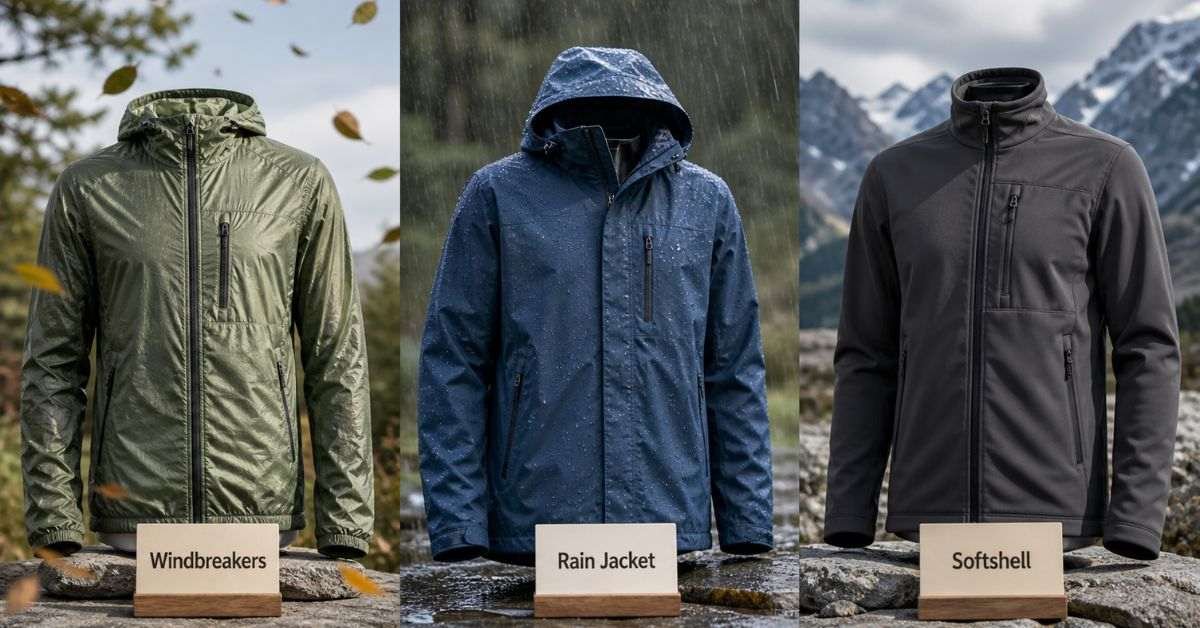
Many people confuse a wind shell with a rain jacket, but they are not designed for the same job. Columbia explains that rain jackets are usually built for heavier rain with waterproof fabrics, membranes, or sealed construction, while lighter wind shells are mainly built to stop wind and handle only short periods of light moisture.
Here is the simple difference:
| Jacket Type | Best For | Weak Point |
| Windbreaker | Wind, light rain, daily wear, running, hiking, travel | Not made for steady rain |
| Rain jacket | Rain, wet hikes, storms, long outdoor exposure | Can feel heavier or warmer |
| Softshell jacket | Cool weather, stretch, light warmth, active use | Less packable and often heavier |
| Fleece jacket | Warmth and comfort under a shell | Wind passes through easily |
If you live in a place with sudden showers, choose a wind shell with a DWR finish. DWR means durable water repellent. It helps water bead on the surface for a short time, but it is not the same as full waterproofing.
For heavy rain, choose a proper rain jacket. For breezy daily use, a light wind shell is usually more comfortable.
What Are Windbreakers? Quick Definition for Buyers
Windbreakers are thin, lightweight jackets designed to block wind and reduce wind chill during mild to cool weather. Most are made from nylon or polyester, and many include a hood, full zipper, elastic cuffs, and a packable design for outdoor activities or everyday use.
They are best when you need protection from wind, light drizzle, and quick temperature changes. They are not designed to replace winter coats or waterproof storm shells.
When buying one, think about your main use first:
| Main Use | Best Features to Look For |
| Running | Very light fabric, vents, reflective details, slim fit |
| Hiking | Hood, hem drawcord, ripstop fabric, packable pocket |
| Travel | Wrinkle-resistant fabric, neutral color, secure pockets |
| Cycling | Longer back hem, close cuffs, bright color or reflective logo |
| Daily wear | Comfortable fit, simple design, hand pockets, easy layering |
This helps you avoid buying a jacket that looks good online but feels wrong in real life.
Common Mistakes When Buying Windbreakers
Choosing waterproof when you only need wind protection
Some buyers pay more for a rain shell when they only need a light jacket for breezy days. Waterproof jackets can be useful, but they may feel warmer, noisier, or less comfortable during active use.
Ignoring breathability
A jacket that blocks wind too well can trap sweat. Outdoor Gear Lab notes that breathability matters because trapped sweat can make you overheat, then cool down too quickly when you stop moving.
Look for vents, mesh lining, breathable fabric, or a looser fit if you plan to run, hike, or bike.
Buying the wrong fit
A Windbreakers jacket that is too loose lets wind enter through the waist, cuffs, and hood. A jacket that is too tight leaves no room for a hoodie or fleece.
A good fit should allow:
- Easy shoulder movement
- One light layer underneath
- Sleeves that cover the wrists
- Hem coverage when you raise your arms
- A hood that stays in place
Thinking light rain protection means waterproof
Many styles can handle drizzle, but steady rain will eventually soak through. If the forecast says hours of rain, carry a real rain jacket.
Forgetting pocket placement
For hiking or travel, zipped pockets matter. For running, too many pockets add bounce and weight. For cycling, chest pockets may be easier to reach than lower hand pockets.
Pro Tips and Best Practices for Better Comfort
Layering is the easiest way to get more value from your jacket. A wind shell on its own works in mild weather. Add a fleece or hoodie underneath, and it becomes useful in colder conditions.
Use this simple layering method:
- Base layer: A breathable T-shirt or moisture-wicking top.
- Warm layer: A fleece, hoodie, or light sweater.
- Outer shell: Your wind jacket to block moving air.
In 2026, more shoppers are also looking at sustainability, not just performance. The Outdoor Industry Association reported that casual outdoor categories have become a strong driver of market behavior, while outdoor retail sales reached $28 billion in 2024. Many buyers now want jackets that work for both city wear and light outdoor use.
Also check fabric chemistry when possible. Some older water-repellent finishes used PFAS-based chemicals. EPA-listed research on DWR outdoor clothing found that weathering can affect PFAS profiles and concentrations in treated textiles, which is one reason many brands now promote PFAS-free DWR finishes.
Best practices:
- Choose PFAS-free DWR when available.
- Pick recycled nylon or polyester if sustainability matters to you.
- Wash with mild detergent, not heavy fabric softener.
- Air dry or follow the care label carefully.
- Reapply DWR only when water stops beading.
- Keep a packable jacket in your bag for sudden weather changes.
For style, neutral colors like black, navy, gray, olive, and beige are easiest to wear daily. Bright colors are better for running, cycling, and low-light visibility.
FAQs
Are windbreakers waterproof?
Windbreakers are usually water-resistant, not fully waterproof. They can handle light rain or drizzle for a short time, especially with a DWR finish. For steady rain, storms, or long wet hikes, a proper rain jacket with sealed seams is the better choice.
Can you wear a windbreaker in winter?
Yes, you can wear a windbreaker in winter if you layer it over warm clothing. It blocks cold wind, while a fleece, hoodie, or thermal layer provides warmth. On very cold days, it should not replace an insulated coat.
Why does my windbreaker feel sweaty inside?
Your windbreaker feels sweaty because the fabric may block airflow while trapping body heat and moisture. This is common during running, hiking, or cycling. Choose breathable fabric, vented panels, or a slightly roomier fit if you use it for active movement.
What fabric is best for a windbreaker?
Nylon and polyester are the most common fabrics for lightweight wind jackets. Nylon often feels strong and smooth, while polyester can dry quickly and hold color well. Ripstop versions are better for hiking, travel, and repeated outdoor use.
Should a windbreaker fit loose or tight?
A windbreaker should fit close enough to block wind but loose enough for one light layer underneath. Too loose allows wind to enter through gaps. Too tight limits movement and makes layering uncomfortable.
How do you wash a windbreaker?
Wash a windbreaker with mild detergent on a gentle cycle, then follow the care label for drying. Avoid bleach, heavy softeners, and high heat unless the label allows it. These can damage coatings, elastic parts, and water-repellent finishes.
How long should a lightweight wind jacket last?
A good lightweight Windbreakers jacket can last several years with normal use and proper care. Durability depends on fabric thickness, seam quality, zipper strength, and how often you use it. Hiking through brush or washing it incorrectly can shorten its life.
Conclusion
Windbreakers are one of the most practical outerwear pieces because they are light, packable, and useful in many real-life situations. They protect you from wind chill, handle light moisture, and work well for walking, running, hiking, cycling, travel, and casual daily outfits.
The ideal option will depend on how you intend to utilize it. For active wear, focus on breathability and fit. For travel, choose packability and secure pockets. For daily style, pick comfort and simple design. When you choose carefully, Windbreakers can become the jacket you reach for more often than any heavy coat.
Visit the rest of the site for more interesting and useful articles.